Buy cityscooter.be ?
We are moving the project
cityscooter.be .
Are you interested in purchasing the domain
cityscooter.be ?
domain@kv-gmbh.de · 0541-91531010
Buy cityscooter.be ?
Why are hydrogen bonds stronger than dipole-dipole interactions?
Hydrogen bonds are stronger than dipole-dipole interactions because they involve a specific interaction between a hydrogen atom and a highly electronegative atom such as oxygen, nitrogen, or fluorine. This creates a strong partial positive charge on the hydrogen atom and a strong partial negative charge on the electronegative atom, leading to a strong attraction between the two. In contrast, dipole-dipole interactions occur between the partial positive and negative charges of polar molecules, which are generally weaker than the specific interaction between a hydrogen atom and a highly electronegative atom in a hydrogen bond. **
What is the difference between dipole-dipole forces and hydrogen bonds?
Dipole-dipole forces are attractive forces between the positive end of one polar molecule and the negative end of another polar molecule. These forces occur between any two polar molecules and are relatively weaker than hydrogen bonds. On the other hand, hydrogen bonds are a specific type of dipole-dipole force that occurs between a hydrogen atom bonded to a highly electronegative atom (such as oxygen, nitrogen, or fluorine) and a lone pair of electrons on another highly electronegative atom. This type of bond is stronger than regular dipole-dipole forces and is responsible for the unique properties of water and other molecules with hydrogen bonding. **
Similar search terms for Hydrogen bonds Dipole-dipole
Top-Angebote
Products related to Hydrogen bonds Dipole-dipole:
-
Kallos KJMN Professional Hydrogen Peroxide révélateur 6% 20 Vol. à usage professionnel 100 mlKallos KJMN Professional Hydrogen Peroxide, 100 ml, Émulsions activatrices pour femme, Obtenez un résultat parfait lorsque vous vous teintez les cheveux. L’émulsion activatrice Kallos KJMN Professional Hydrogen Peroxide fait fonction d’agent oxydant ou de révélateur lors des colorations. Lorsqu’elle est utilisée dans les bonnes proportions avec une coloration permanente, elle permet de couvrir uniformément les cheveux, d’accentuer nettement la teinte et son éclat et, de ce fait, d’obtenir un résultat plus intense. Grâce à son action sur la consistance du mélange colorant, elle garantit également une application plus précise. Le produit : agit comme agent oxydant lors de la coloration des cheveux Mode d’emploi : Pour usage professionnel uniquement.1,76 €*Shipping: 3,45 €Secure redirect to the provider
-
Kallos KJMN Professional Hydrogen Peroxide révélateur 12% 40 Vol. à usage professionnel 150 mlKallos KJMN Professional Hydrogen Peroxide, 150 ml, Émulsions activatrices pour femme, Obtenez un résultat parfait lorsque vous vous teintez les cheveux. L’émulsion activatrice Kallos KJMN Professional Hydrogen Peroxide fait fonction d’agent oxydant ou de révélateur lors des colorations. Lorsqu’elle est utilisée dans les bonnes proportions avec une coloration permanente, elle permet de couvrir uniformément les cheveux, d’accentuer nettement la teinte et son éclat et, de ce fait, d’obtenir un résultat plus intense. Grâce à son action sur la consistance du mélange colorant, elle garantit également une application plus précise. Le produit : agit comme agent oxydant lors de la coloration des cheveux Mode d’emploi : Pour usage professionnel uniquement.1,68 €*Shipping: 3,45 €Secure redirect to the provider
-
BURTON QUICK COMMUTE WMNBURTON QUICK COMMUTE WMNHey rider, here you can find everything you've to know about the BURTON QUICK COMMUTE WMN JACKET. QUICK COMMUTE WMN JACKET BURTON The QUICK COMMUTE WMN is a high quality BURTON WOMAN JACKET. This item has a hot lining, it's perfect for w102,90 €*Shipping: 0,00 €Secure redirect to the provider


-
How do you distinguish between Van der Waals forces, dipole-dipole interactions, and hydrogen bonds?
Van der Waals forces are the weakest of the three interactions and occur between all molecules, regardless of their polarity. Dipole-dipole interactions occur between polar molecules and are stronger than Van der Waals forces. Hydrogen bonds are the strongest of the three interactions and occur between molecules with a hydrogen atom bonded to a highly electronegative atom such as oxygen, nitrogen, or fluorine. These interactions are important in determining the physical and chemical properties of substances and play a crucial role in various biological processes. **
-
Is hydrogen a dipole?
Yes, hydrogen is a dipole. A dipole is a molecule that has a positive and negative end due to an uneven distribution of electrons. In the case of hydrogen, it forms a polar covalent bond with other elements, such as oxygen, resulting in a slight positive charge on the hydrogen atom and a slight negative charge on the other atom. This makes hydrogen a dipole molecule. **
-
Where can one find van der Waals forces, dipole-dipole forces, and hydrogen bonds in everyday life?
Van der Waals forces can be found in everyday life in the form of geckos climbing walls using the weak intermolecular forces between their feet and the surface. Dipole-dipole forces can be observed in the interaction between water molecules, which have a slight positive and negative charge, leading to the formation of hydrogen bonds. Hydrogen bonds are also present in DNA, where they help hold the double helix structure together. These forces are essential for various biological and physical phenomena in our daily lives. **
-
What is the difference between hydrogen bonding and dipole-dipole interactions?
Hydrogen bonding is a specific type of dipole-dipole interaction that occurs between a hydrogen atom bonded to a highly electronegative atom (such as oxygen, nitrogen, or fluorine) and another electronegative atom in a different molecule. This type of interaction is stronger than regular dipole-dipole interactions because of the large electronegativity difference between the hydrogen and the other atom, resulting in a stronger attraction between the molecules. In contrast, dipole-dipole interactions occur between the positive end of one polar molecule and the negative end of another polar molecule, but do not involve a hydrogen atom bonded to a highly electronegative atom. **

What is the difference between a dipole-dipole interaction and hydrogen bonding?
The main difference between a dipole-dipole interaction and hydrogen bonding is the strength of the interaction. Dipole-dipole interactions occur between polar molecules, where the positive end of one molecule is attracted to the negative end of another molecule. This interaction is weaker than hydrogen bonding. Hydrogen bonding is a specific type of dipole-dipole interaction that occurs between a hydrogen atom bonded to a highly electronegative atom (such as oxygen, nitrogen, or fluorine) and a lone pair of electrons on another highly electronegative atom. This type of interaction is stronger than a regular dipole-dipole interaction and can significantly impact the properties of substances, such as boiling point and solubility. **
What are the characteristics of Van der Waals forces, dipole-dipole interactions, and hydrogen bonding?
Van der Waals forces are weak attractive forces between molecules due to temporary dipoles that occur when the electron distribution around an atom is momentarily uneven. Dipole-dipole interactions occur between polar molecules with permanent dipoles, where the positive end of one molecule is attracted to the negative end of another. Hydrogen bonding is a specific type of dipole-dipole interaction that occurs between a hydrogen atom bonded to a highly electronegative atom (such as oxygen, nitrogen, or fluorine) and a lone pair of electrons on another electronegative atom. These interactions are stronger than van der Waals forces and regular dipole-dipole interactions, and they play a crucial role in determining the physical and chemical properties of substances. **
Top-Angebote
Products related to Hydrogen bonds Dipole-dipole:
-
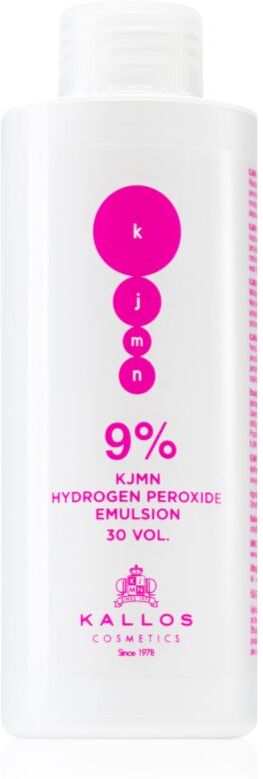
Kallos KJMN Professional Hydrogen Peroxide crème peroxyde 9% 150 mlKallos KJMN Professional Hydrogen Peroxide, 150 ml, Émulsions activatrices pour femme, Le révélateur Kallos KJMN Professional Hydrogen Peroxide est un produit indispensable pour les colorations permanentes ou semi-permanentes des cheveux. Le produit : agit comme agent oxydant lors de la coloration des cheveux permet de couvrir les cheveux blancs et aussi d’éclaircir de plusieurs teintes pour mélanger la teinte avec des produits de la même gamme Mode d’emploi : Suivez les instructions du manuel joint. Pour usage professionnel uniquement.1,28 €*Shipping: 3,45 €Secure redirect to the provider
-
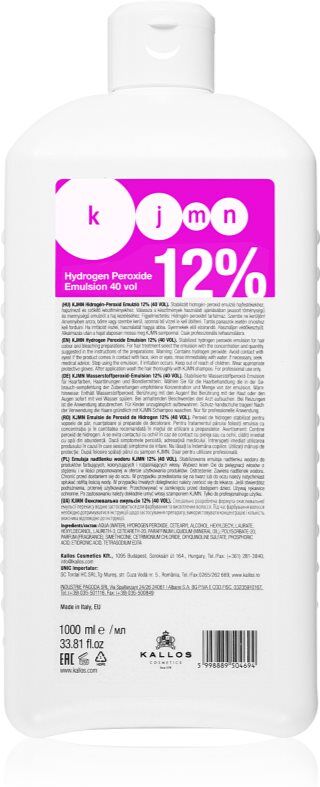
Kallos KJMN Professional Hydrogen Peroxide révélateur 12% 40 Vol. à usage professionnel 1000 mlKallos KJMN Professional Hydrogen Peroxide, 1000 ml, Émulsions activatrices pour femme, Obtenez un résultat parfait lorsque vous vous teintez les cheveux. L’émulsion activatrice Kallos KJMN Professional Hydrogen Peroxide fait fonction d’agent oxydant ou de révélateur lors des colorations. Lorsqu’elle est utilisée dans les bonnes proportions avec une coloration permanente, elle permet de couvrir uniformément les cheveux, d’accentuer nettement la teinte et son éclat et, de ce fait, d’obtenir un résultat plus intense. Grâce à son action sur la consistance du mélange colorant, elle garantit également une application plus précise. Le produit : agit comme agent oxydant lors de la coloration des cheveux Mode d’emploi : Pour usage professionnel uniquement.7,20 €*Shipping: 3,45 €Secure redirect to the provider
-
Kallos KJMN Professional Hydrogen Peroxide révélateur 6% 20 Vol. à usage professionnel 100 mlKallos KJMN Professional Hydrogen Peroxide, 100 ml, Émulsions activatrices pour femme, Obtenez un résultat parfait lorsque vous vous teintez les cheveux. L’émulsion activatrice Kallos KJMN Professional Hydrogen Peroxide fait fonction d’agent oxydant ou de révélateur lors des colorations. Lorsqu’elle est utilisée dans les bonnes proportions avec une coloration permanente, elle permet de couvrir uniformément les cheveux, d’accentuer nettement la teinte et son éclat et, de ce fait, d’obtenir un résultat plus intense. Grâce à son action sur la consistance du mélange colorant, elle garantit également une application plus précise. Le produit : agit comme agent oxydant lors de la coloration des cheveux Mode d’emploi : Pour usage professionnel uniquement.1,76 €*Shipping: 3,45 €Secure redirect to the provider
-
Kallos KJMN Professional Hydrogen Peroxide révélateur 12% 40 Vol. à usage professionnel 150 mlKallos KJMN Professional Hydrogen Peroxide, 150 ml, Émulsions activatrices pour femme, Obtenez un résultat parfait lorsque vous vous teintez les cheveux. L’émulsion activatrice Kallos KJMN Professional Hydrogen Peroxide fait fonction d’agent oxydant ou de révélateur lors des colorations. Lorsqu’elle est utilisée dans les bonnes proportions avec une coloration permanente, elle permet de couvrir uniformément les cheveux, d’accentuer nettement la teinte et son éclat et, de ce fait, d’obtenir un résultat plus intense. Grâce à son action sur la consistance du mélange colorant, elle garantit également une application plus précise. Le produit : agit comme agent oxydant lors de la coloration des cheveux Mode d’emploi : Pour usage professionnel uniquement.1,68 €*Shipping: 3,45 €Secure redirect to the provider
-
Why are hydrogen bonds stronger than dipole-dipole interactions?
Hydrogen bonds are stronger than dipole-dipole interactions because they involve a specific interaction between a hydrogen atom and a highly electronegative atom such as oxygen, nitrogen, or fluorine. This creates a strong partial positive charge on the hydrogen atom and a strong partial negative charge on the electronegative atom, leading to a strong attraction between the two. In contrast, dipole-dipole interactions occur between the partial positive and negative charges of polar molecules, which are generally weaker than the specific interaction between a hydrogen atom and a highly electronegative atom in a hydrogen bond. **
-
What is the difference between dipole-dipole forces and hydrogen bonds?
Dipole-dipole forces are attractive forces between the positive end of one polar molecule and the negative end of another polar molecule. These forces occur between any two polar molecules and are relatively weaker than hydrogen bonds. On the other hand, hydrogen bonds are a specific type of dipole-dipole force that occurs between a hydrogen atom bonded to a highly electronegative atom (such as oxygen, nitrogen, or fluorine) and a lone pair of electrons on another highly electronegative atom. This type of bond is stronger than regular dipole-dipole forces and is responsible for the unique properties of water and other molecules with hydrogen bonding. **
-
How do you distinguish between Van der Waals forces, dipole-dipole interactions, and hydrogen bonds?
Van der Waals forces are the weakest of the three interactions and occur between all molecules, regardless of their polarity. Dipole-dipole interactions occur between polar molecules and are stronger than Van der Waals forces. Hydrogen bonds are the strongest of the three interactions and occur between molecules with a hydrogen atom bonded to a highly electronegative atom such as oxygen, nitrogen, or fluorine. These interactions are important in determining the physical and chemical properties of substances and play a crucial role in various biological processes. **
-
Is hydrogen a dipole?
Yes, hydrogen is a dipole. A dipole is a molecule that has a positive and negative end due to an uneven distribution of electrons. In the case of hydrogen, it forms a polar covalent bond with other elements, such as oxygen, resulting in a slight positive charge on the hydrogen atom and a slight negative charge on the other atom. This makes hydrogen a dipole molecule. **
Similar search terms for Hydrogen bonds Dipole-dipole
-
BURTON QUICK COMMUTE WMNBURTON QUICK COMMUTE WMNHey rider, here you can find everything you've to know about the BURTON QUICK COMMUTE WMN JACKET. QUICK COMMUTE WMN JACKET BURTON The QUICK COMMUTE WMN is a high quality BURTON WOMAN JACKET. This item has a hot lining, it's perfect for w102,90 €*Shipping: 0,00 €Secure redirect to the provider
-
Kallos KJMN Professional Hydrogen Peroxide révélateur 9% 30 Vol. à usage professionnel 100 mlKallos KJMN Professional Hydrogen Peroxide, 100 ml, Émulsions activatrices pour femme, Obtenez un résultat parfait lorsque vous vous teintez les cheveux. L’émulsion activatrice Kallos KJMN Professional Hydrogen Peroxide fait fonction d’agent oxydant ou de révélateur lors des colorations. Lorsqu’elle est utilisée dans les bonnes proportions avec une coloration permanente, elle permet de couvrir uniformément les cheveux, d’accentuer nettement la teinte et son éclat et, de ce fait, d’obtenir un résultat plus intense. Grâce à son action sur la consistance du mélange colorant, elle garantit également une application plus précise. Le produit : agit comme agent oxydant lors de la coloration des cheveux Mode d’emploi : Pour usage professionnel uniquement.3,12 €*Shipping: 3,45 €Secure redirect to the provider
-
Where can one find van der Waals forces, dipole-dipole forces, and hydrogen bonds in everyday life?
Van der Waals forces can be found in everyday life in the form of geckos climbing walls using the weak intermolecular forces between their feet and the surface. Dipole-dipole forces can be observed in the interaction between water molecules, which have a slight positive and negative charge, leading to the formation of hydrogen bonds. Hydrogen bonds are also present in DNA, where they help hold the double helix structure together. These forces are essential for various biological and physical phenomena in our daily lives. **
-
What is the difference between hydrogen bonding and dipole-dipole interactions?
Hydrogen bonding is a specific type of dipole-dipole interaction that occurs between a hydrogen atom bonded to a highly electronegative atom (such as oxygen, nitrogen, or fluorine) and another electronegative atom in a different molecule. This type of interaction is stronger than regular dipole-dipole interactions because of the large electronegativity difference between the hydrogen and the other atom, resulting in a stronger attraction between the molecules. In contrast, dipole-dipole interactions occur between the positive end of one polar molecule and the negative end of another polar molecule, but do not involve a hydrogen atom bonded to a highly electronegative atom. **
-
What is the difference between a dipole-dipole interaction and hydrogen bonding?
The main difference between a dipole-dipole interaction and hydrogen bonding is the strength of the interaction. Dipole-dipole interactions occur between polar molecules, where the positive end of one molecule is attracted to the negative end of another molecule. This interaction is weaker than hydrogen bonding. Hydrogen bonding is a specific type of dipole-dipole interaction that occurs between a hydrogen atom bonded to a highly electronegative atom (such as oxygen, nitrogen, or fluorine) and a lone pair of electrons on another highly electronegative atom. This type of interaction is stronger than a regular dipole-dipole interaction and can significantly impact the properties of substances, such as boiling point and solubility. **
-
What are the characteristics of Van der Waals forces, dipole-dipole interactions, and hydrogen bonding?
Van der Waals forces are weak attractive forces between molecules due to temporary dipoles that occur when the electron distribution around an atom is momentarily uneven. Dipole-dipole interactions occur between polar molecules with permanent dipoles, where the positive end of one molecule is attracted to the negative end of another. Hydrogen bonding is a specific type of dipole-dipole interaction that occurs between a hydrogen atom bonded to a highly electronegative atom (such as oxygen, nitrogen, or fluorine) and a lone pair of electrons on another electronegative atom. These interactions are stronger than van der Waals forces and regular dipole-dipole interactions, and they play a crucial role in determining the physical and chemical properties of substances. **
* All prices are inclusive of VAT and, if applicable, plus shipping costs. The offer information is based on the details provided by the respective shop and is updated through automated processes. Real-time updates do not occur, so deviations can occur in individual cases. ** Note: Parts of this content were created by AI.